
The production industry is changing rapidly. Where many tasks used to be performed entirely by hand, companies today are increasingly using machines, robots, and smart systems. This development is also known as automation.
To some people, automation sounds as if machines are taking over all tasks. In practice, it is different. Production companies invest in technology to work more efficiently, improve quality, and support employees. At the same time, people continue to play an indispensable role on the work floor.
In this blog, we explain why production companies are increasingly automating and what this means for employees in the sector.
What is automation?
Automation means that certain tasks are performed by machines or computers instead of entirely by humans. This can involve simple actions, such as packaging products, but also complex processes where multiple machines work together.
In modern production environments, machines are often deployed to perform repetitive tasks. This allows processes to run faster and more accurately.
Automation does not mean that people disappear from the production process. Employees remain necessary for monitoring, operation, maintenance, and problem-solving.
Why do companies choose automation?
An important reason is efficiency. Machines can often work for longer periods consecutively and perform the same action in the same way every time. This reduces the chance of errors and ensures better product quality.
In addition, many companies struggle to find sufficient personnel. By automating certain tasks, organizations can maintain their production capacity while deploying employees for tasks where human knowledge and experience are required.
The increasing demand for products also plays a role. Companies must deliver faster and look for ways to optimize production processes.
Better quality and fewer errors
In many production companies, quality is central. Customers expect products that meet fixed requirements and specifications. Machines can help with this because they work very precisely.
When a process is largely automated, deviations are noticed more quickly and quality remains more consistent. This does not mean that quality control disappears. On the contrary, employees remain responsible for checks and identifying any problems.
Automation therefore supports quality, but does not completely replace human control.
What does this mean for employees?
Many people wonder if automation costs jobs. In reality, roles often change more than they disappear. Tasks are organized differently and employees receive new responsibilities.
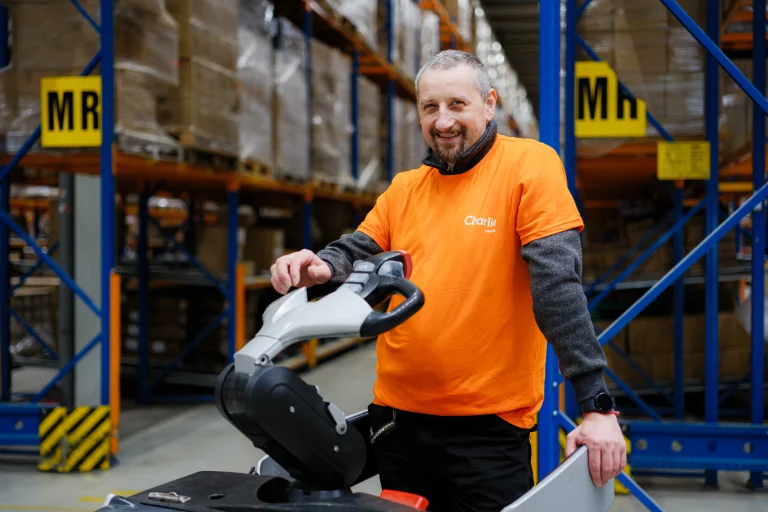
Where manual work was primarily performed in the past, employees now work more often with machines, scanners, and digital systems. This creates roles in which technical knowledge and problem-solving skills become more important.
For employees, this offers opportunities to learn new skills and further develop within a company.
New skills are becoming more important
Automation also changes the demand for personnel. Employers are increasingly looking for employees who can work with modern equipment and are willing to learn how to use new systems.
That does not mean everyone needs technical education. Many companies offer internal training where employees learn to handle machines and production systems.
Traits such as accuracy, responsibility, and a willingness to learn remain at least as important as technical knowledge. It is precisely those employees who are open to development who often have good career advancement opportunities.
Automation and safety
In addition to efficiency, safety plays an important role. Machines can take over heavy, repetitive, or risky tasks. As a result, employees are less exposed to physically demanding work.
This does not mean that safety becomes less important. Employees still need to know how machines work and which safety rules apply. Therefore, companies invest heavily in training and clear work instructions.
A safe working environment remains a joint responsibility of both employers and employees.
How Does Charlie works Help?
At Charlie works, we see that more and more production companies are investing in modern technology. That is why we look not only at work experience, but also at motivation and willingness to learn.
We help employees find roles that match their skills and guide them during the start. Even if you do not yet have experience with automated processes, there are often opportunities to further develop yourself.
In this way, we ensure that employees are ready for the production environment of today and tomorrow. Do you want to start in production? View our vacancies.