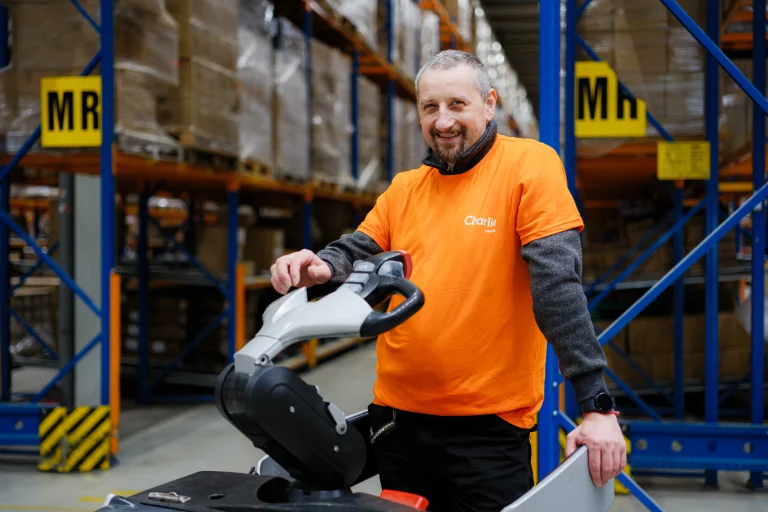
The Dutch labor market is in a state of constant flux. Anyone wondering how many people work in the Netherlands will find figures that have grown significantly in recent years. Employers are searching for personnel, sectors are struggling with shortages, and labor migrants are playing an increasingly vital role in the daily operations of logistics, production, and transport. In this article, we outline the most important facts and examine the trends shaping the labor market.
How many people work in the Netherlands?
According to figures from Statistics Netherlands (CBS), the Netherlands has a working population of over 9.9 million people. Historically, this is a very high number. Labor participation is around 73 percent, meaning that nearly three-quarters of people between the ages of 15 and 75 are in paid employment. However, these figures do not tell the whole story. Behind these large numbers lies a market that is reaching its limits in many areas.
Unemployment has been low for a considerable time. Simultaneously, there are hundreds of thousands of job vacancies. Employers in logistics hubs, production halls, and distribution centers feel this shortage daily. Without extra hands, production comes to a standstill, packages are left behind, and deliveries are delayed.
Which sectors are the largest?
Employment in the Netherlands is divided across various sectors. A few stand out in terms of employee numbers:
- Healthcare and welfare
- Trade
- Business services
- Industry and production
- Transport and logistics
The latter two, in particular, serve as an entry point into the Dutch labor market for many international employees. Warehouses in Venlo, Tilburg, and around Rotterdam rely significantly on workers from other European countries. This is no different in the food industry and at packaging companies.
The role of labor migrants
Labor migration has become an integral part of the Dutch economy. Estimates vary, but hundreds of thousands of labor migrants work in the Netherlands, primarily from Eastern and Southern Europe. This includes people from Poland, Romania, Bulgaria, Spain, and Portugal. They fill positions for which there are simply not enough people to be found within the Netherlands itself.
Without this group, a large portion of supermarket shelves would remain empty and distribution centers would not meet their turnaround times. The dependency is high, and at the same time, the discussion regarding fair working conditions and housing is more relevant than ever. You can read more about this in our article on labor migrants in the Netherlands.
Why labor migration is here to stay
The aging population continues to grow. In the coming years, more people will retire than young people will enter the labor market. This means that the demand for labor migrants will not decrease, but rather increase. Employers who invest now in proper guidance and housing are building a stable workforce for the long term. You can read about how international employees often stay longer than expected in why international employees are often more loyal than thought.
Permanent, flexible, and self-employed: how is the work divided?
The majority of the working population has a permanent contract. In addition, there is a substantial group with a flexible contract and a growing group of self-employed professionals. Flexible workers are indispensable in sectors where demand fluctuates seasonally. A webshop needs more people in November than in February, and a packaging company works overtime around the holidays. Flexible deployment ensures that these peaks are managed without employers being tied to structural overcapacity.
What does this mean for employers?
The tightness of the labor market forces employers to look beyond the local talent pool. Those who act in time and collaborate with a partner that arranges both good people and quality housing will be in a stronger position. Charlie works connects European labor migrants with employers in logistics and production, while arranging high-standard housing. The latter is not a minor detail: good living conditions determine whether someone leaves after a few months or stays.
What does this mean for job seekers?
For people from other European countries considering coming to the Netherlands, the labor market is currently favorable. There is work, wages are competitive, and the travel distance from many European countries is manageable. In advantages of working in the Netherlands, you can read more extensively about what the country has to offer, from the social system to the infrastructure.
In conclusion
Anyone wondering how many people work in the Netherlands will find a figure of nearly 10 million. But behind that number is a labor market that relies on a mix of Dutch nationals, labor migrants, and flexible workers. The shortage will not disappear in the short term, and labor migration remains a vital engine. Employers who handle this smartly and employees considering the move to the Netherlands will find a partner in Charlie works that effectively coordinates work and housing.